Home > Families & Carers > Family Guide > Understanding Paediatric Palliative Care: A guide for parents
Understanding Paediatric Palliative Care: A guide for parents of children with childhood dementia conditions
A clear explanation of paediatric palliative care designed for parents.
Is this resource helpful?
Summary
-
What paediatric palliative care means
-
How palliative care can help your child and family
-
How to access palliative care services
-
Advance care planning support
If your family is impacted by childhood dementia, we invite you to receive updates and learn about ways to connect with Childhood Dementia Initiative and with other families.
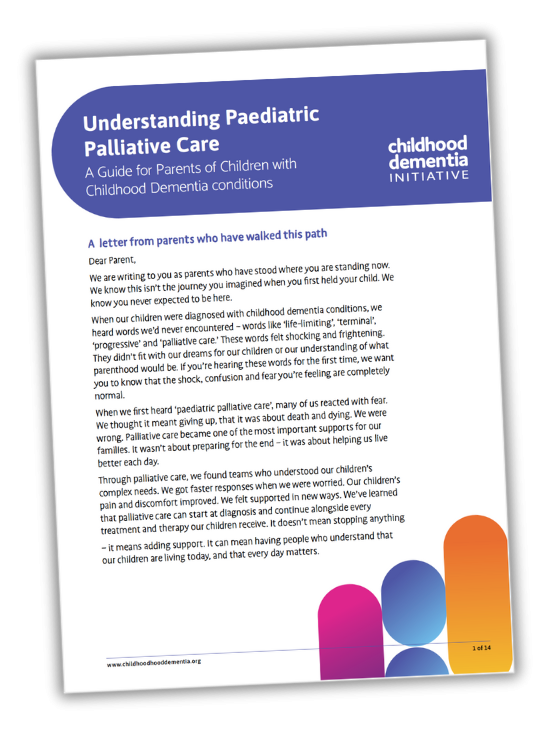
A LETTER FROM PARENTS WHO HAVE WALKED THIS PATH
Dear Parent,
We are writing to you as parents who have stood where you are standing now. We know this isn’t the journey you imagined when you first held your child. We know you never expected to be here. When our children were diagnosed with childhood dementia conditions, we heard words we’d never encountered — words like ‘life-limiting’, ‘terminal’, ‘progressive’ and ‘palliative care.’ These words felt shocking and frightening. They didn’t fit with our dreams for our children or our understanding of what parenthood would be. If you’re hearing these words for the first time, we want you to know that the shock, confusion and fear you’re feeling are completely normal.
When we first heard ‘paediatric palliative care’, many of us reacted with fear. We thought it meant giving up, that it was about death and dying. We were wrong. Palliative care became one of the most important supports for our families. It wasn’t about preparing for the end — it was about helping us live better each day.
Through palliative care, we found teams who understood our children’s complex needs. We got faster responses when we were worried. Our children’s pain and discomfort improved. We felt supported in new ways. We’ve learned that palliative care can start at diagnosis and continue alongside every treatment and therapy our children receive. It doesn’t mean stopping anything — it means adding support. It can mean having people who understand that our children are living today, and that every day matters.
We won’t lie to you — this journey is hard. There are days that break your heart. There are moments when the weight of it all feels unbearable. But there are also moments of profound love, unexpected laughter and deep connection. There are small victories to celebrate and memories to treasure. Your child is still your child — the same person you’ve always loved, with their own personality, preferences and ways of experiencing joy. We’ve learned to take things one day at a time, to find hope in small moments and to trust our instincts about what our children need. You don’t have to figure this out all at once. You don’t have to absorb everything immediately.
This guide contains information you can return to when you’re ready, when questions arise, or when you need to advocate for your child. There’s no timeline you must follow, no perfect way to navigate this journey. What we want you to know most is that you are not alone. Other parents have walked this path and found their way through. Your love for your child remains the most powerful force in their life. You are exactly the parent your child needs, even when you don’t feel like you know what you’re doing. The information in this guide comes from our experiences — the hard-won knowledge of parents who have learned to navigate systems, advocate for our children and find support when we need it most. Take your time. Be gentle with yourself. Trust your instincts. And remember — there is still hope, there is still love, and there is still life to be lived.
With understanding and solidarity,
Fellow parents of children with childhood dementia conditions
UNDERSTANDING PALLIATIVE CARE
We understand you’re navigating one of the most challenging experiences any parent can face. If healthcare providers have mentioned ‘paediatric palliative care’, you may feel confused, frightened or even resistant to the idea. These reactions are natural and shared by many families who first hear this term. This guide has been created to help you understand what paediatric palliative care really means — not as something to fear, but as a form of support designed to improve your child’s comfort and your family’s quality of life. You don’t need to read everything now. Take your time, return to sections when you’re ready, and know that understanding these services is just one step in caring for your child.
The paediatric palliative approach
The most important thing to understand is that paediatric palliative care is NOT about giving up on your child or preparing for the end of life. It is about improving quality of life from diagnosis onwards.
What is the palliative approach?
- The paediatric palliative approach is a way of thinking about care that focuses on:
- Your child as a whole person — not just their medical condition
- Quality of life for your child and entire family
- Managing symptoms that affect your child’s comfort and wellbeing
- Supporting your family through the challenges you face
- Honouring your values and what matters most to your family Working alongside all other treatments and therapies
This approach recognises that:
- Whilst your child has a life-limiting condition, they are living today
- Every day matters and should be as good as possible
- Your family’s needs are unique and important
- You know your child best
Important: Many healthcare professionals use this approach in their care without calling it ‘palliative care’. You might already be receiving palliative care approaches through your child’s current medical team.
The World Health Organisation definition
The World Health Organisation defines palliative care for children as: The active total care of the child’s body, mind and spirit, and also involves giving support to the family. It begins when illness is diagnosed, and continues regardless of whether or not a child receives treatment directed at the disease It can be provided in hospitals, community health centres and even in children’s homes
Key points:
- Palliative care is based on need, not prognosis — it’s best to start early. It can begin at any stage of your child’s condition, even at diagnosis
- It works alongside medical treatments aimed at managing your child’s condition
- It can include physical, emotional, social and spiritual care for the whole family
What is a paediatric palliative care service?
A paediatric palliative care service is a specialised team of healthcare professionals who are specifically trained to provide the palliative approach to care. They work alongside your child’s existing medical team.
Important: While many healthcare professionals use elements of the palliative approach, dedicated palliative care teams are specially trained to provide comprehensive, family-centred care from this perspective.
You might be thinking: “Do we need this?”
The answer depends on your family’s needs. Some families find their current team already provides everything they need using the palliative approach. Others find that adding a specialised palliative care team provides additional support, better symptom management, and improved coordination. You might not need it now. Making the referral and connection will help as the condition progresses.
What makes paediatric palliative care different?
Paediatric palliative care services are different from adult palliative care and different from standard medical care:
- They’re designed specifically for children and families, understanding that children’s needs change as they grow
- They focus on the whole family, not just the patient
- They can work with you for months or years, not just weeks
- They work with uncertainty — many childhood conditions don’t have predictable timelines
- They support normal childhood experiences alongside medical care
- They often provide priority access to other services when needed
PAEDIATRIC PALLIATIVE CARE AND YOUR FAMILY
Real parent experiences: why paediatric palliative care made a difference
“Information is choice and information is power, and now I feel informed.” - Parent
Before we explain what palliative care is, here’s what parents who have been through this journey want you to know:
It’s not about giving up — it is about quality of life
“Hannah is not actually sick...but it’s about quality of life. We need someone to help us with her symptoms, which is the quality of life stuff.” - Rachel
Priority access when you need it most
“Once we were in palliative care... things move very quickly, and not because it’s the end of life. It’s because it’s a priority. They know it’s important... You don’t want your kid to spend a lot of time in hospital so you can go home quickly, or they can see your child quicker. It’s good for your mental health and also for your kid.” - Ana
Access to better symptom management
“I was always asking for medicine for Philip, because he was vomiting all the time, at least 8 times a day... they said, ‘No, we cannot give you anything’ until he went to palliative care at the end, and they said, ‘we can give the medicine we give to people with terminal cancer’... and he didn’t vomit. And it made the difference... I could see he was not suffering.” - Ana
“We had those days where Louis would cry for 6, 7 hours straight ... you’re allowed to say things like ‘his medications need review’. You’re allowed to prompt things.” - Amy and James
Early connection builds important relationships
“We were referred to palliative care quite early on.... it was really positive to have a relationship with palliative care that preceded Mia getting really sick... it was really helpful for our family to have that pre-existing relationship and familiarity with the staff, before we were in very vulnerable personal space.” - Peta
Flexible approach to trying different things
“Having that sort of more flexible approach, and a relaxed approach to trying different things was really helpful... if it’s good for the child, let’s try it.” - Amy
You might already be receiving palliative care without realising it
If your child’s doctors are focusing on comfort, quality of life, and supporting your whole family — that’s the palliative approach, even if it’s not called that.
How does paediatric palliative care support your family?
For your child
Priority access
- Faster responses when you need help
- Direct contact numbers for urgent concerns
- Recognition that your child’s needs are complex
- Less time waiting in emergency departments
Better symptom management
- Improved pain relief from pain experts
- Help with seizures, breathing difficulties, nausea, sleep problems
- Medication reviews and management
- Access to specialists who understand complex symptoms
Improved comfort and quality of life
- Focus on what makes your child comfortable and happy
- Support for activities they enjoy
- Maintaining their relationships and interests
- Advocacy for their needs in all settings
Age-appropriate support
- Communication that matches your child’s understanding
- Play therapy, music therapy and other specialised allied health
- Support for normal childhood experiences
- Respect for their personality and preferences Transition from paediatric to adult services, when needed
For you as parents
Help navigating complex systems
- Someone who understands the healthcare maze
- Coordination between different specialists
- Advocacy when you need it — when you feel overwhelmed, and/or when teams might not be listening to you
- Clear communication about your child’s care
Emotional and practical support
- Understanding of what you’re going through
- Support with difficult decisions
- Respite care options
- Connection with other families
- Training and support to administer medications and use equipment, so you can provide the care your child needs safely at home
Planning support
- Help thinking about immediate and future needs
- Assistance with advance care planning, when you’re ready
- Support for the decisions that matter to your family
- Coordination of equipment and services
For siblings
Children with life-limiting conditions are not the only ones who need support. Siblings often experience:
- Worry and confusion about their sibling
- Feeling left out or forgotten
- Disruption to their daily life and reduced time with parents
- Fear about their own health
- Guilt about being healthy when their sibling isn’t
- Behavioural changes in response to family stress
How paediatric palliative care supports siblings
- Sibling support groups
- Age-appropriate counselling
- Information and education about their sibling’s condition
- Fun activities and respite opportunities
- Connection with other children in similar situations
- Family therapy to improve communication
Family support
- Recognition that the whole family is affected
- Help maintaining sibling relationships
- Support for their own grief and worries
- Respite activities and fun experiences
For extended family
Information and support
- Help understanding your child’s condition
- Guidance on how to support your family
- Connection to other families
- Resources for grandparents and other relatives
COMMON CONCERNS AND MISCONCEPTIONS
Common concerns parents have
We understand these concerns because other parents have shared them with us.
Does this mean we’re giving up hope?
No. Paediatric palliative care works alongside treatments and can continue for months or years, from the point of diagnosis. Many families receive palliative care while still pursuing treatments and therapies.
Hope can take many forms:
- Hope for comfort and reduced suffering
- Hope for quality time together
- Hope for your child to experience joy
- Hope for better symptom management
- Hope for meaningful experiences and memories
- Hope for research and new treatments
Is this only for when my child is dying?
No. Palliative care is appropriate for any child with a serious, life-limiting condition. It can help throughout your child’s journey, not just at the end. Many children receive palliative care support for years while living full lives.
Will this upset my child or make them feel worse?
No. Children often feel better with palliative care because their symptoms are better managed and they have additional support. The focus is on helping them feel as good as possible.
Do we have to choose between treatment and palliative care?
No. Palliative care works alongside all other treatments and therapies. You don’t give up anything by accessing palliative care — you gain additional support.
Common misconceptions vs reality
Misconception: “Palliative care means we’re giving up”
Reality: Palliative care means adding extra support to help your child live as well as possible.
Misconception: “It’s only for the last few weeks of life”
Reality: Many children receive palliative care for months or years, living full and meaningful lives.
Misconception: “It will make my child sad or scared”
Reality: Children often feel better and more comfortable with palliative care support.
Misconception: “We have to choose between treatment and palliative care”
Reality: Palliative care works alongside curative treatments and therapies.
HOW TO ACCESS PAEDIATRIC PALLIATIVE CARE
Understanding your rights
You have the right to:
- Ask for a referral to paediatric palliative care services
- Request information about what services are available in your area
- Choose whether to accept palliative care services
- Be involved in all decisions about your child’s care
- Change your mind about services your child is receiving at any time
The reality: you may need to push
Based on parent experiences, here’s what you need to know:
Don’t wait for services to contact you. As one parent shared: “You need to push, push, push, push, because things don’t come easy... I contacted them, I didn’t have any answer until the week he passed, and it was too late.”
Important note: This is not a checklist you must complete. These are tools you can use when they feel right for your family. Some families need to advocate when they’re told they’re ‘not ready yet’ for referrals — trust your instincts about what your family needs.
Steps to take
- Ask your child’s specialist or GP about paediatric palliative care services
- Request a referral — don’t assume it will happen automatically
- Follow up on referrals if you don’t hear back within a week or 2
- Put reminders in your calendar to check on referrals
- Contact services directly if referrals are delayed
- Explain your situation clearly — mention that your child has a life-limiting condition
What to say when advocating
- “My child has [condition] which is a life-limiting condition”
- “We would like to access paediatric palliative care services for quality of life support”
- “Can you please refer us to the palliative care team?”
- “When can we expect to hear from them?”
- “This is time-sensitive due to my child’s condition”
- “We understand palliative care supports quality of life, not just end of life”
Questions to ask healthcare providers
About services available
- What paediatric palliative care services are available in our area?
- How do we access these services?
- What is the referral process?
- Is there a waiting list?
- Can we visit the service before making a decision?
About your child’s care
- How can palliative care help with my child’s specific symptoms?
- What medications or treatments might be available?
- How will this work with our current medical team?
- Can care be provided at home?
- What support is available for our whole family?
About practical support
- Is there 24/7 support available?
- What’s covered by Medicare?
- What equipment or medications can you provide?
- Do you have connections with schools/childcare?
- What other families could we connect with?
- What supports do you have for parents?
WHEN YOU'RE READY: PLANNING AHEAD
Palliative care can help with advance care planning when you’re ready. This isn’t about planning for death — it’s about planning for your child living well with their condition.
You don’t have to do this immediately. When you’re ready, it can include:
- Care preferences for different situations
- Treatment decisions and limits you’re comfortable with
- Where you’d prefer care to be provided Important goals for you and your child
- Practical arrangements for care needs
- Quality of life priorities for your family
Remember: You can change these plans at any time as your situation or wishes change.
Building your support team
Your paediatric palliative care team might include:
- Paediatric palliative care doctor
- Palliative care nurse
- Social worker or family support worker
- Child life specialist
- Chaplain or spiritual care coordinator/therapist (if wanted)
- Volunteers trained to support families
- Mental health workers
Working with your existing team
- The palliative care team works alongside:
- Your child’s primary specialists
- General practitioner
- Allied health professionals (physiotherapy, occupational therapy, speech therapy)
- School or childcare support staff
Extended support network
- Other families in similar situations
- Respite care providers
- Equipment and service providers
- Community support organisations
Looking after yourself
Caring for a child with a life-limiting condition is one of the most challenging things anyone can face. It’s emotionally and physically exhausting.
Your grief is real and valid. You may be grieving:
- The future you imagined for your child
- Lost abilities and milestones
- The impact on your family
- Your own sense of helplessness
How palliative care can support you
- Respite care to give you essential breaks
- Counselling and emotional support from people who understand
- Practical help with care tasks
- Connection to other parents for peer support
- Information about support services for carers
Looking after yourself is also important for your child. Many palliative care services understand this and can provide support and connections for you, too.
Questions for your first palliative care appointment
About their service
- What services and support do you provide?
- How often will we see you?
- Is there 24/7 support available?
- How do we access it?
- Can you provide care at home?
- How do you coordinate with our other doctors?
About our family
- How can you help with my child’s specific symptoms?
- What support is available for siblings?
- What respite options do you have?
- How do you support families through this journey?
- What should we expect moving forward?
Practical questions
- How do we contact you in emergencies?
- What’s covered by Medicare?
- What equipment or medications can you provide?
- Do you have connections with schools/childcare?
- What other families could we connect with?
- Can we visit your facilities?
- How do you handle after-hours concerns?
Moving forward with confidence
Remember that accessing paediatric palliative care is:
- Your right as parents
- Your choice about what services to use
- An addition to your child’s care, not a replacement
- About quality of life for your whole family
- Available throughout your child’s journey
- Something you can change your mind about at any time
As one parent shared: “It creates that positive space, and it creates a network... it’s a very approachable and nice organisation.”
Remember...
Every family’s journey with childhood dementia is unique, but you don’t have to navigate it alone. Paediatric palliative care — whether through your current team using this approach or through specialised services — is designed to support you and your child in living as well as possible, for as long as possible.
Don’t let fear or misconceptions prevent you from exploring these services. Many parents wish they had connected earlier once they understand what paediatric palliative care actually involves.
Your family’s needs and comfort level matter.
Whether you access formal palliative care services or work with your current team to incorporate more of the palliative approach, the goal is the same: the best possible quality of life for your child and family.
Trust your instincts, advocate for your child, and remember that asking for help is a sign of strength, not weakness.
You are doing an incredible job in unimaginable circumstances. You don’t have to carry this alone.
This guide is intended as general information about paediatric palliative care. Every experience is unique, so always discuss your specific needs and circumstances with healthcare professionals.
Co-designed with parents whose lived experience with childhood dementia and palliative care has shaped every aspect of this resource.
RESOURCES AND WHERE TO FIND HELP
National resources
State-based services
Each state has different paediatric palliative care services. Ask your child’s doctor about local services or search online for ‘[your state] paediatric palliative care’.
Emergency support
- Your palliative care team’s contact number (ask for this at your first appointment)
- Local children’s hospital emergency department
- Your child’s specialist team
This guide is intended as general information about paediatric palliative care. Every experience is unique, so always discuss your specific needs and circumstances with healthcare professionals.
Co-designed with parents whose lived experience with childhood dementia and palliative care has shaped every aspect of this resource.
For more resources and support:
www.childhooddementia.org/families-and-carersEmail: services@childhooddementia.org
Connect and stay up to date
If your family is impacted by childhood dementia, we invite you to receive updates and learn about ways to connect with Childhood Dementia Initiative and with other families.